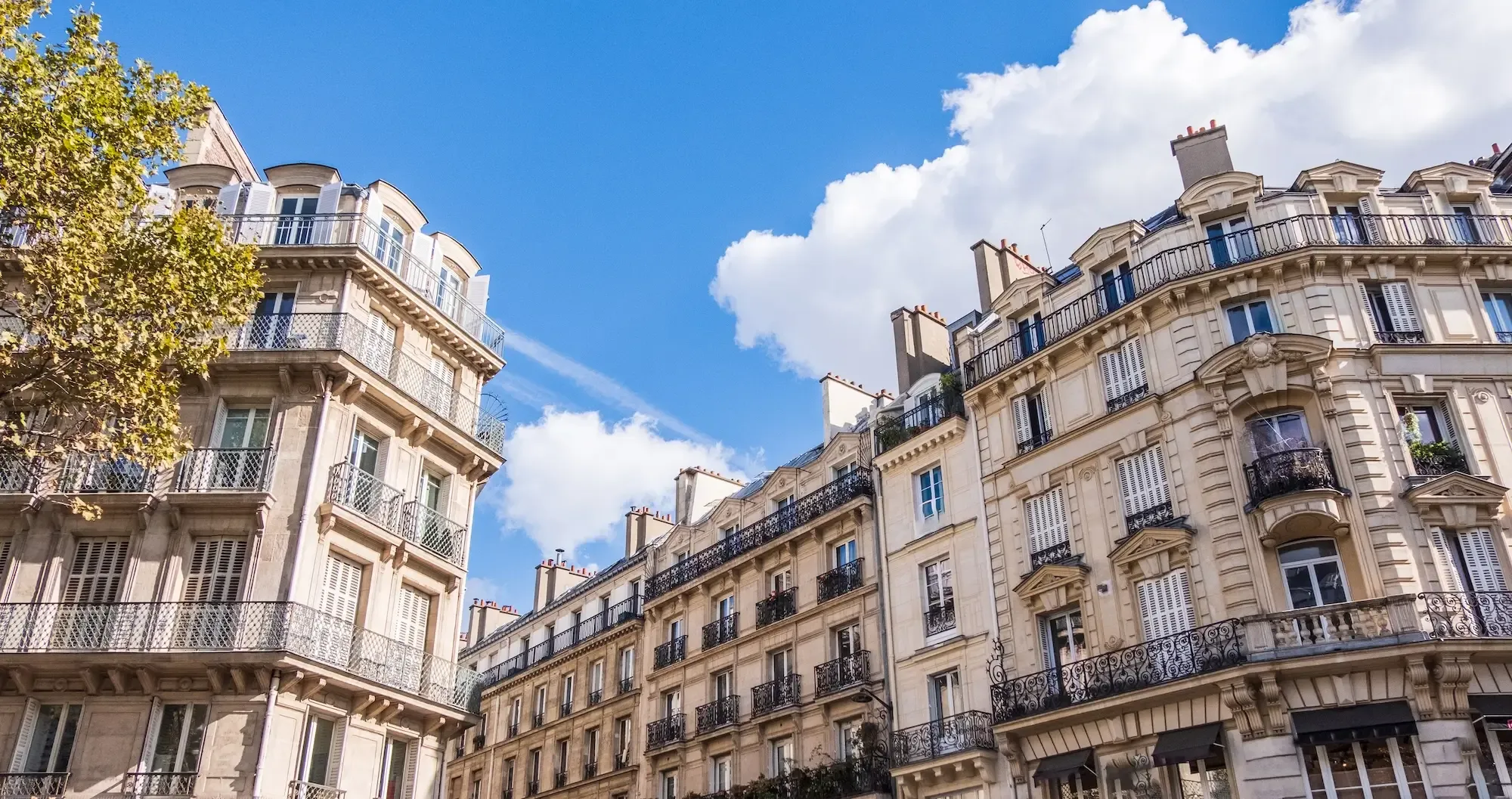
If you’re planning a move to Paris, rent is the single biggest line item in your budget — and the one most likely to catch you off guard. Paris is not just expensive. It’s fast, competitive, and unforgiving if you’re not prepared.
This guide breaks down what you’ll actually pay to rent an apartment in Paris, arrondissement by arrondissement. Whether you’re relocating for work, starting a new chapter, or moving your family across the Atlantic, you’ll find the numbers, the context, and the practical advice you need to make smart decisions.
Why Is Renting in Paris So Expensive?
Before looking at the numbers, it helps to understand what’s driving them. Paris isn’t expensive by accident — it’s the result of structural forces that have been tightening the market for years.
Demand far exceeds supply. Paris accounts for over 10% of all rental searches in France, yet the number of available listings has dropped by nearly 60% over the past five years. Professionals, students, expats, and creatives are all competing for the same shrinking pool of apartments.
There’s almost no room to build. Paris is a historic city with strict building regulations and very limited space for new construction, particularly in the central arrondissements. Add the progressive ban on renting energy-inefficient properties (DPE ratings F and G have been excluded since January 2025) and tighter rules on short-term rentals, and the available housing stock keeps shrinking.
Mortgage rates pushed more people into renting. French mortgage rates climbed from around 1% in 2022 to over 4% in early 2024 before stabilizing near 3%. Many would-be buyers have been priced out of purchasing, which adds even more pressure to an already stretched rental market.
The result? The average rent-to-income ratio in Paris now exceeds 36% — significantly higher than comparable European capitals like Brussels (around 30%) or Vienna (below 30%). Paris has a rental vacancy rate of just 1–2%, which means that when a good apartment hits the market, it’s gone within days.
Average Rent in Paris: The Big Picture
Rents in Paris vary dramatically depending on three things: where you live, how big the apartment is, and whether it’s furnished or not. Here’s a high-level overview before we break it down by arrondissement.
Unfurnished apartments
For an unfurnished apartment (location vide), average rents across Paris currently sit around €27–€30 per square meter per month. That translates to roughly €650–€720 for a studio, €1,100–€1,300 for a one-bedroom, and €1,700–€1,900 for a two-bedroom — though central arrondissements push well beyond those ranges.
Keep in mind: unfurnished in France often means truly empty. No light fixtures, no curtain rods, sometimes no kitchen appliances. The tradeoff is a longer lease (typically three years), giving you more stability if you’re staying long-term.
Furnished apartments
Furnished apartments (location meublée) command a premium of roughly 15–25% over unfurnished equivalents. Expect to pay approximately €33–€41 per square meter per month, depending on the neighborhood and the quality of furnishings.
Here’s what that looks like in real monthly budgets:
| Apartment type | Typical size | Average rent (furnished) | USD equivalent |
|---|---|---|---|
| Studio | 20–25 m² | €800–€1,100/month | $860–$1,190 |
| 1-bedroom | 35–45 m² | €1,300–€1,700/month | $1,400–$1,840 |
| 2-bedroom | 55–70 m² | €1,800–€2,500/month | $1,950–$2,700 |
| 3-bedroom | 80–100 m² | €2,600–€3,500/month | $2,810–$3,780 |
For most expats and international renters, furnished apartments are the practical choice. You can move in with a suitcase, utilities may already be in the owner’s name, and you avoid the significant upfront cost of furnishing an empty Parisian apartment. The lease is shorter (one year, renewable), which gives you flexibility if your plans change.
The extra cost of a furnished rental is almost always worth it for your first year in Paris. You need that time to learn the city, understand the neighborhoods, and figure out where you really want to settle long-term.
Rent Prices by Arrondissement: The Complete Breakdown
Paris is divided into 20 arrondissements, arranged in a clockwise spiral starting from the center. Each one has its own personality, housing stock, and price range. Where you choose to live will be the single biggest factor in what you pay.
The table below shows average rents per square meter (for furnished apartments) and estimated monthly rent for a typical 40 m² one-bedroom in each arrondissement:
| Arr. | Neighborhood | Avg. €/m² (furnished) | Est. 1-bed rent | Best for |
|---|---|---|---|---|
| 1st | Louvre / Les Halles | €40–€45 | €1,600–€1,800 | Short-term expats, executives |
| 2nd | Bourse / Sentier | €38–€42 | €1,520–€1,680 | Young professionals, tech workers |
| 3rd | Upper Marais | €38–€44 | €1,520–€1,760 | Culture lovers, international renters |
| 4th | Le Marais / Île Saint-Louis | €40–€45 | €1,600–€1,800 | Couples, design professionals |
| 5th | Latin Quarter | €35–€40 | €1,400–€1,600 | Students, academics, researchers |
| 6th | Saint-Germain-des-Prés | €40–€46 | €1,600–€1,840 | High-income households, diplomats |
| 7th | Eiffel Tower / Invalides | €38–€43 | €1,520–€1,720 | Families, diplomats |
| 8th | Champs-Élysées / Madeleine | €36–€41 | €1,440–€1,640 | Corporate relocations |
| 9th | Opéra / South Pigalle | €34–€38 | €1,360–€1,520 | Young professionals, foodies |
| 10th | Canal Saint-Martin / Gare du Nord | €33–€37 | €1,320–€1,480 | Creatives, remote workers |
| 11th | Bastille / Oberkampf | €33–€37 | €1,320–€1,480 | Night owls, young couples |
| 12th | Bercy / Nation | €30–€34 | €1,200–€1,360 | Families, long-term renters |
| 13th | Bibliothèque / Butte-aux-Cailles | €28–€33 | €1,120–€1,320 | Budget-conscious, students |
| 14th | Montparnasse / Alésia | €30–€35 | €1,200–€1,400 | Professionals, quiet seekers |
| 15th | Vaugirard / Commerce | €30–€35 | €1,200–€1,400 | Families, long-term residents |
| 16th | Trocadéro / Passy | €33–€38 | €1,320–€1,520 | Families, international schools |
| 17th | Batignolles / Ternes | €31–€36 | €1,240–€1,440 | Young families, village-feel seekers |
| 18th | Montmartre / Goutte d’Or | €28–€34 | €1,120–€1,360 | Artists, budget-minded expats |
| 19th | Buttes-Chaumont / La Villette | €27–€31 | €1,080–€1,240 | First-time renters, young professionals |
| 20th | Belleville / Père-Lachaise | €27–€32 | €1,080–€1,280 | Creatives, community-oriented |
Now let’s take a closer look at each area, grouped by price tier and personality.
Central Paris (1st–6th) — The Premium Historic Core
These six arrondissements form the historic heart of Paris. They’re home to the Louvre, Notre-Dame, the Panthéon, Le Marais, Saint-Germain-des-Prés, and the Latin Quarter. Apartments here tend to be smaller, older, and significantly more expensive. Supply is extremely limited, and demand never slows down.
The 1st arrondissement (Louvre, Les Halles, Palais Royal) and the 6th (Saint-Germain-des-Prés) sit at the very top of the price range, regularly exceeding €40–€45/m². Even a modest studio here can command €1,000–€1,200/month. These are prestige addresses that attract executives, diplomats, and short-term corporate relocations.
The 3rd and 4th arrondissements (Le Marais) remain among the most desirable areas for American and international renters. The blend of historic architecture, walkability, museums, and nightlife makes them consistently popular — and consistently expensive. Expect €38–€45/m² and very limited availability.
The 2nd arrondissement (Bourse, Sentier) is smaller and less touristy, but increasingly popular with young professionals and the Parisian tech scene. It offers a slightly more residential feel while still being centrally located, with rents around €38–€42/m².
The 5th arrondissement (Latin Quarter) is slightly more accessible, at €35–€40/m², driven by strong demand from students and academics near the Sorbonne and research institutions. Competition for studios and one-bedrooms is fierce here.
Expat tip: In central Paris, speed matters more than anything. A well-located apartment in the 3rd or 4th can receive 20+ applications in the first 48 hours. If you’re searching remotely, having someone on the ground to visit and apply immediately is a major advantage.
Western Paris (7th, 8th, 16th, 17th) — Prestige and Family Living
The western arrondissements are where Paris feels quieter, greener, and more established. These are the neighborhoods that attract families, diplomats, and professionals looking for space and stability.
The 7th arrondissement (Eiffel Tower, Invalides, Rue Cler) combines residential calm with iconic landmarks. It’s one of the most sought-after family neighborhoods, with large Haussmann apartments and excellent schools. Rents range from €38–€43/m², and demand from expatriates — particularly near Rue Cler, Rue de Grenelle, and Rue Saint-Dominique — has been rising.
The 8th arrondissement (Champs-Élysées, Madeleine) is more business-oriented, with a mix of residential and commercial spaces. Rents sit around €36–€41/m² — slightly less pressured than the historic core, but still firmly in premium territory.
The 16th arrondissement (Trocadéro, Passy, Auteuil) offers a very different Parisian experience: wide avenues, large apartments, green spaces, and proximity to bilingual and international schools. At €33–€38/m², the price per square meter is lower than central Paris, but that’s because apartments tend to be larger — meaning your total monthly rent can still be substantial.
The 17th arrondissement (Batignolles, Ternes) has gained significant popularity in recent years. The Batignolles neighborhood in particular offers a village-like atmosphere with excellent dining and a more relaxed pace. Rents around €31–€36/m² make it one of the best value propositions in western Paris.
Expat tip: If you’re relocating with children and need access to international or bilingual schools, the 7th, 16th, and 17th should be at the top of your list. Budget for larger apartments (60–100 m²), which will bring your total monthly rent to €2,000–€3,500+.
Central-North and East (9th–12th) — Trendy, Dynamic, and Well-Connected
These arrondissements represent the sweet spot for many expats: central enough to walk or cycle to most of Paris, lively and characterful, but noticeably cheaper than the 1st through 8th.
The 9th arrondissement (Opéra, South Pigalle, Grands Boulevards) has become increasingly popular with affluent young professionals. Neighborhoods like Saint-Georges and Rue des Martyrs have a strong food and cultural scene. At €34–€38/m², it’s one of the more competitive markets in this tier.
The 10th arrondissement (Canal Saint-Martin, Gare du Nord, République) is the quintessential “trendy” Paris address. The Canal Saint-Martin area draws creatives, remote workers, and young couples. Rents hover at €33–€37/m², but be aware that the northern part of the 10th (near Gare du Nord) can feel very different from the canal area — prices and atmosphere vary street by street.
The 11th arrondissement (Bastille, Oberkampf, Charonne) is one of Paris’s most energetic districts, packed with bars, restaurants, and nightlife. It’s highly competitive for smaller units — studios and one-bedrooms fly off the market. Expect €33–€37/m², with the best spots disappearing within days.
The 12th arrondissement (Bercy, Nation, Bois de Vincennes) offers a calmer alternative with excellent green spaces and a more family-friendly vibe. At €30–€34/m², it’s genuinely more affordable, while still providing great transport links and easy access to central Paris.
Expat tip: The 10th and 11th are wonderful neighborhoods, but quality varies enormously from one block to the next. Visit in person if you can, especially in the evenings, to get a feel for noise levels and atmosphere. What looks charming on a listing photo can be above a busy bar on a narrow street.
South Paris (13th–15th) — Balanced, Livable, Underrated
The southern arrondissements rarely make it onto expat Instagram accounts, but that’s precisely their advantage. They offer genuinely good living at prices that won’t empty your bank account.
The 13th arrondissement (Bibliothèque, Butte-aux-Cailles, Chinatown) has more modern buildings, larger apartments, and a diverse international community. At €28–€33/m², it offers some of the best value within Paris proper. The Butte-aux-Cailles neighborhood in particular has a village feel that surprises newcomers.
The 14th arrondissement (Montparnasse, Alésia, Denfert-Rochereau) is residential, quiet, and well-served by metro and RER lines. At €30–€35/m², it appeals to professionals who want quality housing without the frenzy of central Paris.
The 15th arrondissement is the most populous arrondissement in Paris and one of the most underrated. It’s genuinely family-friendly, with parks, markets, and a relaxed atmosphere. Rents at €30–€35/m² offer real space for your money, and it’s well connected to business districts via metro lines 6, 8, and 12.
Expat tip: If you prioritize living space over address prestige, the 13th–15th offer significantly more square meters per euro. A two-bedroom that costs €2,500 in the 6th might run €1,600–€1,900 in the 14th or 15th.
North and Outer East (18th–20th) — The Best Value in Paris
These three arrondissements offer the lowest rents in Paris — but they’re far from being “budget” neighborhoods. Each has distinct character and a loyal following.
The 18th arrondissement (Montmartre, Abbesses, Goutte d’Or) is a study in contrasts. Montmartre and Abbesses remain iconic and increasingly expensive (some streets push well above the average), while the northern stretches around Goutte d’Or and Barbès are significantly more affordable. Prices range widely from €28–€34/m², making it essential to know which micro-neighborhood you’re targeting.
The 19th arrondissement (Buttes-Chaumont, La Villette, Jaurès) is anchored by one of Paris’s most beautiful parks — Buttes-Chaumont — and the cultural complex at La Villette. At €27–€31/m², it’s the second most affordable arrondissement and is steadily attracting young professionals and families who appreciate the green spaces and community feel.
The 20th arrondissement (Belleville, Ménilmontant, Père-Lachaise) is a melting pot of cultures, creativity, and street art. It has a strong community identity and some of the best views in Paris from its hilltop streets. At €27–€32/m², it represents the best value for renters who want to be in Paris without breaking the bank.
Expat tip: The 19th and 20th are where your money goes furthest, but transport connections to central Paris can add 25–40 minutes to your commute. Factor this into your decision, especially if your workplace is in the western part of the city.
How Rent Control Works in Paris (and How to Check Your Rent)
Paris has had rent control (encadrement des loyers) in place since July 2019. It’s one of the most important tools available to tenants — but it only works if you understand how it functions and take action when necessary.
The three reference rents
The system is based on reference rents calculated each year by the OLAP (Observatoire des Loyers de l’Agglomération Parisienne) and published by the préfecture. For every combination of neighborhood, number of rooms, construction era, and furnished/unfurnished status, there are three figures:
- Reference rent (loyer de référence): The median rent per square meter for your apartment category. This is the baseline.
- Enhanced reference rent (loyer de référence majoré): The reference rent + 20%. This is the legal maximum your landlord can charge as base rent.
- Reduced reference rent (loyer de référence minoré): The reference rent − 30%. Below this, you can ask for a rent increase (rarely relevant for tenants).
In most cases, your base rent (hors charges) cannot exceed the enhanced reference rent for your apartment type and location.
Complément de loyer: when landlords can charge more
Landlords can charge above the enhanced reference rent only if the apartment has genuinely exceptional characteristics — a terrace, an exceptional view, high-end renovations, or rare amenities not typical for the area. This surcharge is called a complément de loyer and must be explicitly justified in your lease.
However, since August 2022, landlords cannot apply a complément de loyer if the apartment has an energy performance rating (DPE) of F or G, lacks proper sanitation, has inadequate heating, or shows signs of moisture damage or pest infestation.
How to check if your rent is legal
The DRIHL (the regional housing authority for Île-de-France) provides a free online tool where you can enter your apartment’s address and characteristics to see the exact reference rents that apply. This should be your first step before signing any lease.
- Go to the DRIHL rent control checker
- Enter your apartment’s address, number of rooms, construction period, and furnished status
- Compare the enhanced reference rent (loyer de référence majoré) with the rent on your lease
- If your rent exceeds the legal maximum, you have grounds to contest it through the Commission Départementale de Conciliation
In practice, many Paris listings are priced right at or near the legal ceiling. Enforcement exists but requires tenant action — the landlord won’t flag the issue for you. As a foreigner, knowing your rights here gives you real leverage.
Read next: Understanding Your French Lease: A Guide for Expats — know exactly what every clause in your contract means before you sign.
Furnished vs. Unfurnished: Which Should You Choose?
This is one of the first decisions you’ll face, and it has implications far beyond the monthly rent.
| Furnished (meublé) | Unfurnished (vide) | |
|---|---|---|
| Lease duration | 1 year (renewable) | 3 years (renewable) |
| Rent premium | 15–25% higher | Baseline |
| Security deposit | 2 months’ rent | 1 month’s rent |
| Notice period (tenant) | 1 month | 3 months (1 month in certain zones) |
| Move-in readiness | Suitcase-ready | Completely empty |
| Best for | First year, short–medium stays | Long-term residents (2+ years) |
For most international renters arriving in Paris, a furnished apartment is the pragmatic choice for year one. You avoid the substantial upfront cost of furnishing an apartment, you can move in immediately, and the one-year lease gives you flexibility to relocate to a different neighborhood once you know the city better.
If you’re planning to stay two or more years and want lower monthly costs, an unfurnished lease becomes increasingly attractive. The monthly savings of 15–25% compound over time, but your need to budget at least €3,000–€8,000 upfront for furniture and appliances.
Beyond Rent: The True Cost of Moving In
Your monthly rent is just one piece of the puzzle. Move-in costs in Paris can add up to three to four months’ rent in upfront expenses. Here’s what to budget for:
Security deposit
One month’s rent for unfurnished apartments, two months for furnished. This is due at lease signing and returned within one to two months after you move out (minus any deductions for damages documented in the état des lieux).
Agency fees
If you rent through a real estate agency under a standard Loi ALUR lease, fees are capped at approximately €12–€15 per square meter in Paris. For a 40 m² apartment, that’s roughly €480–€600. Note: agency fees for Code Civil leases (used for corporate or secondary residence rentals) are not capped and can run significantly higher.
Guarantor costs
Most landlords require a guarantor (garant), someone who agrees to cover your rent if you default. As a foreigner without a French guarantor, your main options are Visale (free, government-backed, for eligible tenants), or private services like Garantme (around 4.5% of annual rent), Smartgarant (around 3%), or Cautioneo (around 3.5%).
Read next: Paris Apartment Guarantor Guide: 6 Options for Expats and Internationals — a detailed breakdown of every guarantor option, with costs and eligibility criteria.
Home insurance
Renter’s insurance (assurance habitation) is legally mandatory in France. You’ll need to provide proof of coverage (attestation) before receiving your keys. Budget €150–€300 per year for a standard Parisian apartment.
Utilities and ongoing costs
On top of rent, budget approximately €100–€180 per month for electricity, gas, internet, and building charges (charges locatives). Water is typically included in rent or building charges.
Read next: What It Costs to Rent in Paris: Rent, Fees, and Hidden Costs — the complete financial breakdown beyond monthly rent.
When to Search — and How Fast the Market Moves
Timing matters. The Paris rental market has clear seasonal patterns:
- Late August through September is the most competitive period, driven by the academic year and September job starts. Expect the fiercest competition and the least negotiating power.
- January sees a secondary wave as new-year relocations and job changes kick in.
- June and July bring pre-summer moves, as people try to settle before the August slowdown.
- November through December tends to be quieter, with slightly less competition. A potential advantage if your timing allows it.
Well-priced apartments in Paris rent within 7 to 15 days. Studios and one-bedrooms in popular neighborhoods can go in under a week. Larger family apartments tend to stay on the market a bit longer (up to 30 days) but still move quickly by international standards.
This means your dossier (rental application file) needs to be complete and ready before you start visiting apartments. A missing document or a delayed response can cost you the apartment.
Related: How Long Does It Take to Find an Apartment in Paris?
Renting in Paris as a Foreigner: What You’re Up Against
Understanding the prices is only half the challenge. As an international renter, you face obstacles that locals don’t:
- Your dossier looks different. French landlords expect French pay slips, French tax returns, and a French guarantor. International documents — even from reputable employers — require extra effort to present credibly: certified translations, apostille stamps, and careful formatting.
- You likely don’t have a French guarantor. This is the single biggest barrier for foreign tenants. Without a garant or a recognized guarantee service, many landlords will simply pass on your application — no matter how strong your income is.
- Language is a real barrier. Most landlords, agencies, and administrative processes operate in French. Lease contracts, property listings, and legal communications are all in French, and nuance matters.
- You’re competing against locals. In a market where apartments receive 10–20+ applications within 48 hours, a French applicant with a local guarantor and a familiar dossier format will almost always be preferred — unless your application is exceptionally well-prepared.
This is exactly the problem Flatigo exists to solve. We prepare your dossier to meet French landlord expectations, handle the search and viewings, negotiate on your behalf, and guide you through the lease signing and move-in inspection. Our clients compete on equal footing with local applicants — because their applications look and feel like local ones.
Key Takeaways
- Budget realistically: A furnished one-bedroom in a central-to-mid arrondissement costs €1,300–€1,700/month. Add 20–30% for move-in costs.
- Location is everything: The gap between the most and least expensive arrondissements exceeds 40%. Choosing the 12th over the 6th can save you €400–€600/month on a one-bedroom.
- Rent control exists — use it: Check your rent against official reference prices before signing. It’s free and takes five minutes.
- The market moves fast: Have your dossier ready before you start looking. A complete, well-presented application is your single biggest advantage.
- Get expert help if you’re coming from abroad: The combination of language barriers, unfamiliar dossier requirements, and the speed of the market makes professional support not a luxury but a practical necessity for most international renters.
Moving to Paris is one of the most exciting decisions you’ll make. The rental market is challenging — but it’s completely navigable with the right preparation, the right information, and the right support.